Book Description
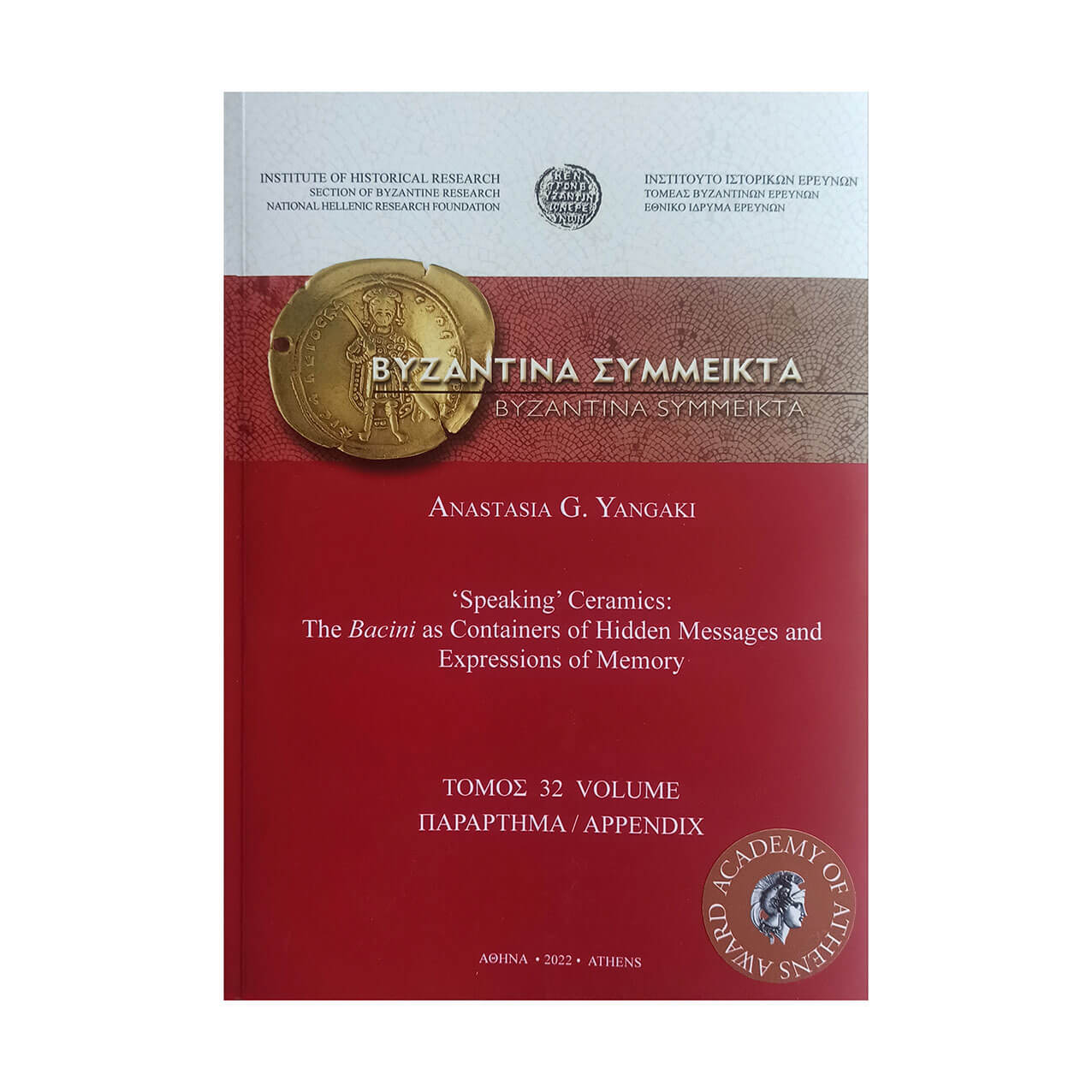
Special Thematic Section in: Byzantina Symmeikta. Appendix 32 (2022)
Vessels immured in churches throughout the Greek territory have been a subject of research since as early as the 1970s. Over the last decade, this research has been systematized within the framework of a dedicated research programme. Drawing on published material from mainland Greece, as well as both published and unpublished data from Crete, this study focuses on the various facets of the use of glazed ceramics on church façades.
Specifically, beyond the purely decorative or functional role of bacini in ecclesiastical monuments, this work seeks to highlight their significance as objects that: a) embody symbolisms through which primarily religious meanings are conveyed; b) provide indirect information regarding their original owners and/or donors; c) function as votive offerings, heirlooms, or even ‘relics’; d) serve as indicators of intercultural osmosis between the “native” and the “external”, the Christian and the Muslim worlds, or between two different Christian denominations; e) express cultural memory throughout the Ottoman and modern eras.