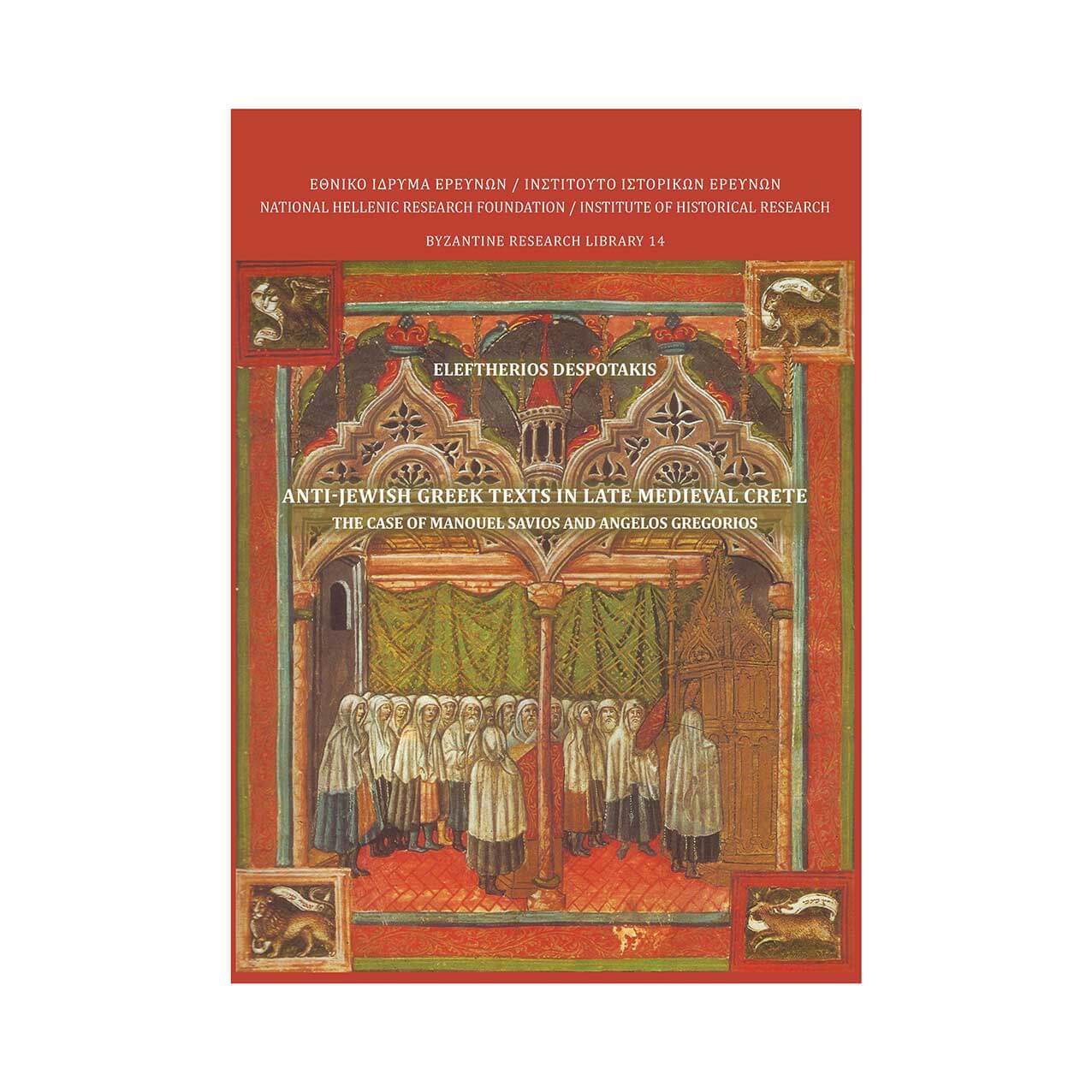
Book Description
The Late Medieval period was shaped by complex interactions between religious identity, social order, and literary expression, with anti-Jewish literature revealing Christian anxieties rather than Jewish realities. Such texts emerged from theological debates, political tensions, and shifting communal boundaries, using narrative and allegory to define Christian identity against a constructed Jewish “Other.”
This study examines Greek anti-Jewish literature in Venetian-ruled Crete within the broader context of Christian–Jewish coexistence. Although Jewish communities were economically and socially integrated, they faced stereotypes, suspicion, and episodic violence rooted in religious prejudice. The research demonstrates that systematic Byzantine-style anti-Jewish polemic was largely absent from Crete. Instead, anti-Jewish sentiments appeared sporadically in vernacular poetry and didactic literature, reflecting inherited patristic stereotypes rather than local conflicts.
Ecclesiastical tensions were dominated by disputes among Orthodox, Catholics, and unionists, marginalizing Jewish participation in theological debates. Manuscript evidence confirms the limited circulation of adversus Iudaeos texts on the island, usually in fragmentary or reworked forms. Notable exceptions include the unpublished works of Manouel Savios and Angelos Gregorios. Their importance lies not in theological originality but in their local authenticity and adaptation of inherited antirrhetic traditions.


